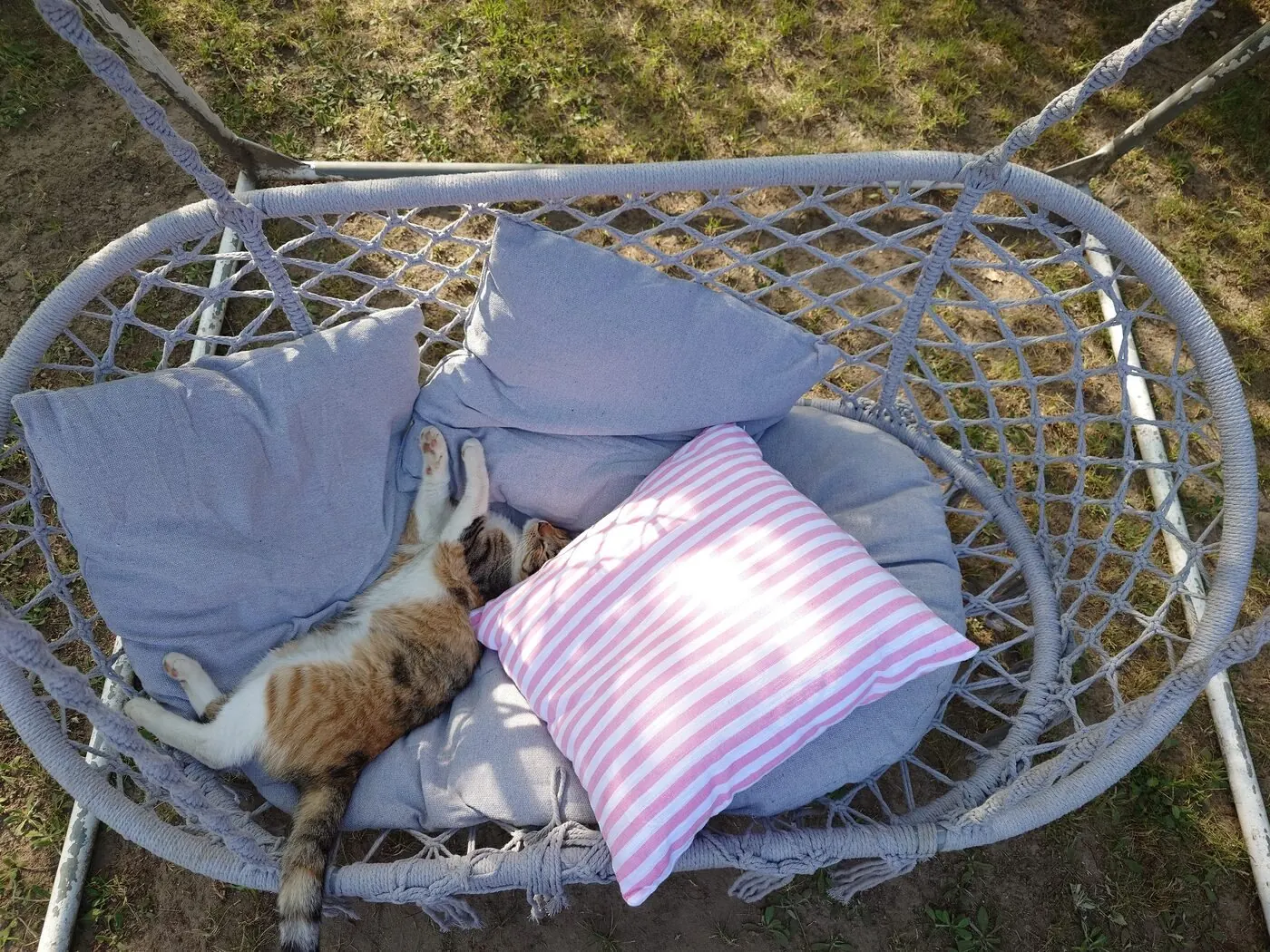
Tuga
One year on
May 2026. From a cardboard box to a hanging chair, cushions and all. Roughly a year after she turned up in the garden.
The diary
The garden had cats before Tuga — her mother among them. She turned up in June 2025, about the size of a hand. These are the photographs I've taken along the way, in no order of importance, only in order of time.
May 2026. From a cardboard box to a hanging chair, cushions and all. Roughly a year after she turned up in the garden.
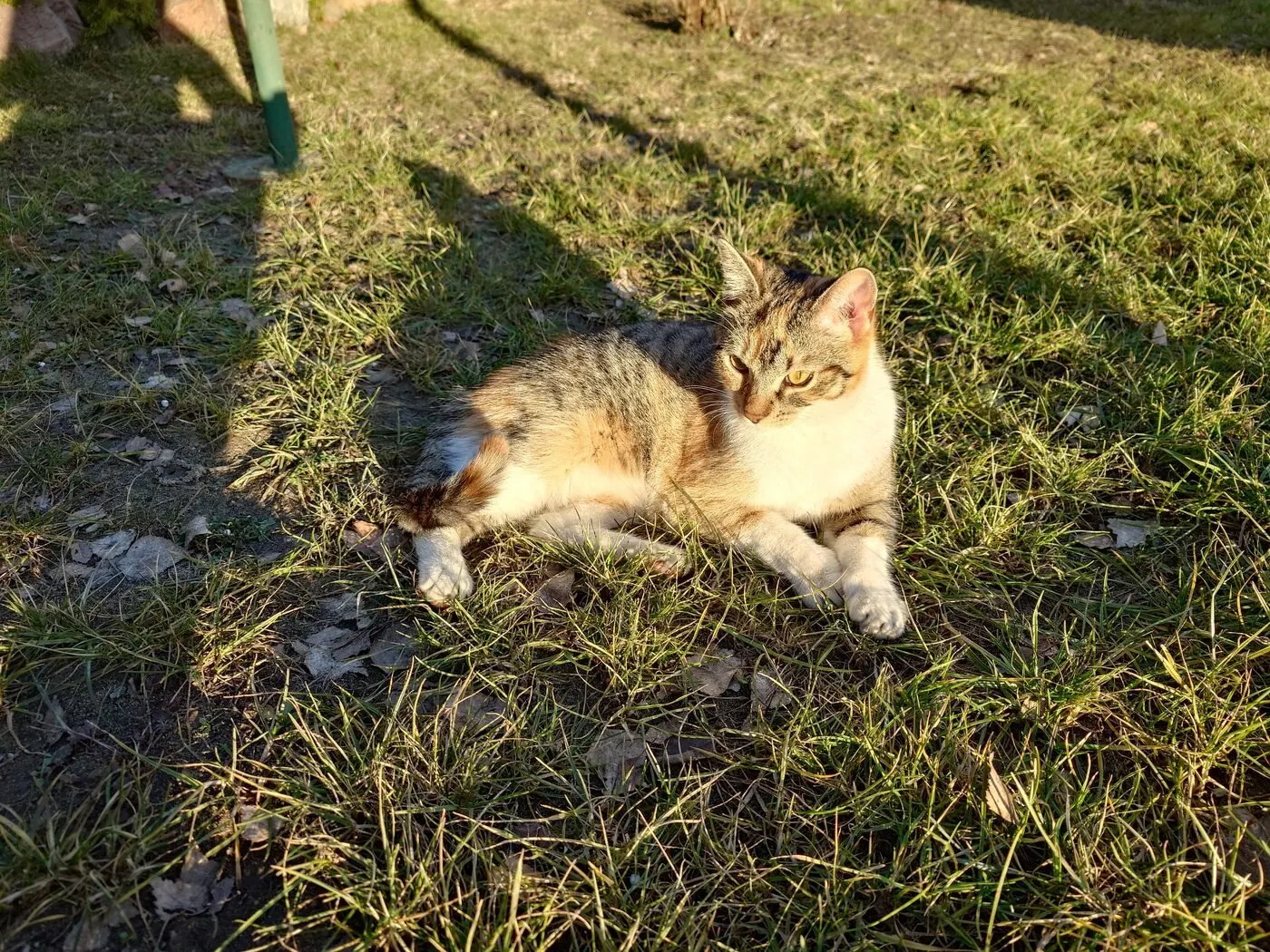
Same day, a few hours later. Early-spring light at the end of the afternoon is the best this garden has to offer.
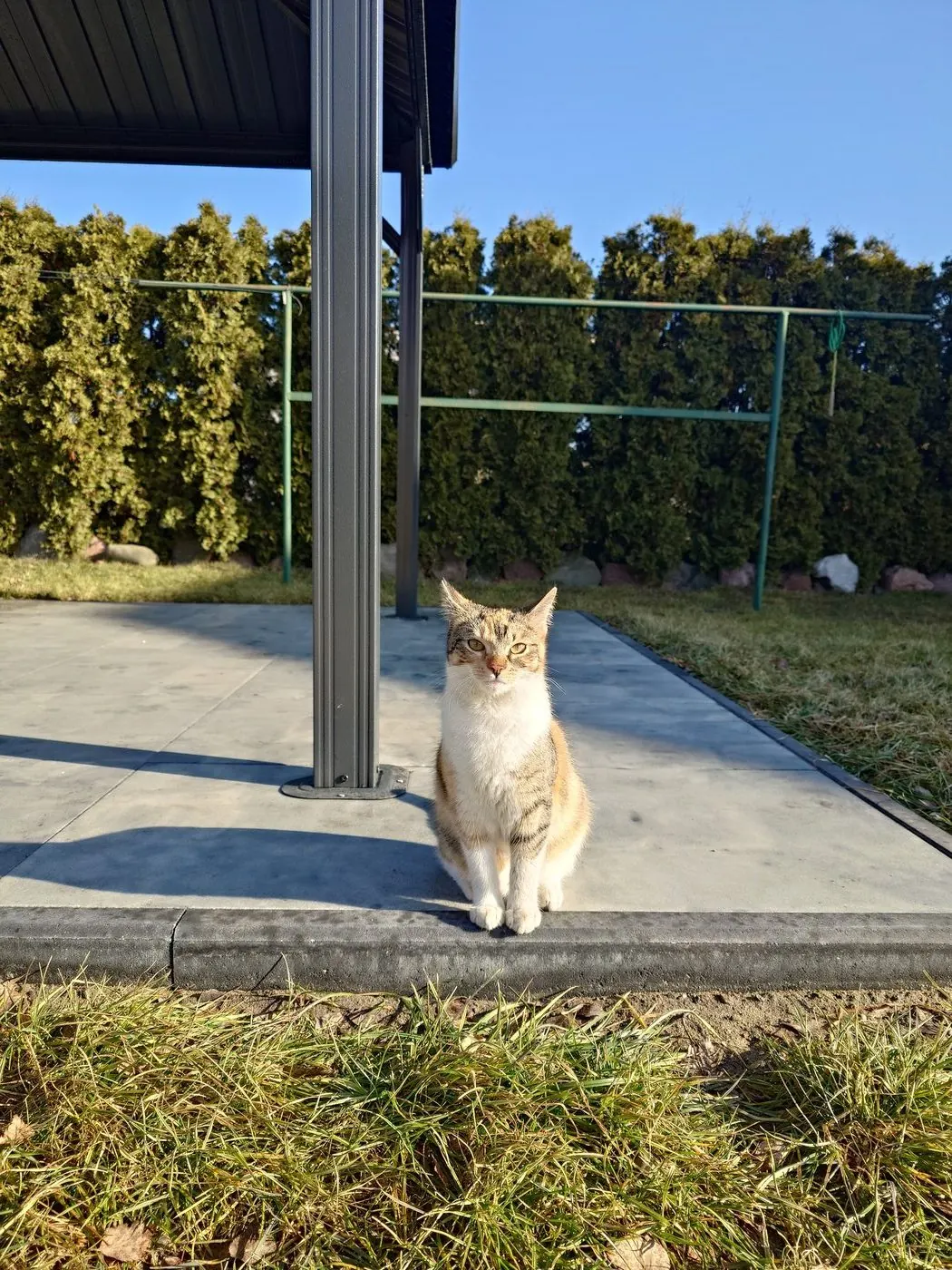
March. The snow went and she went straight back to the same spot as always — the corner of the patio the sun reaches first.
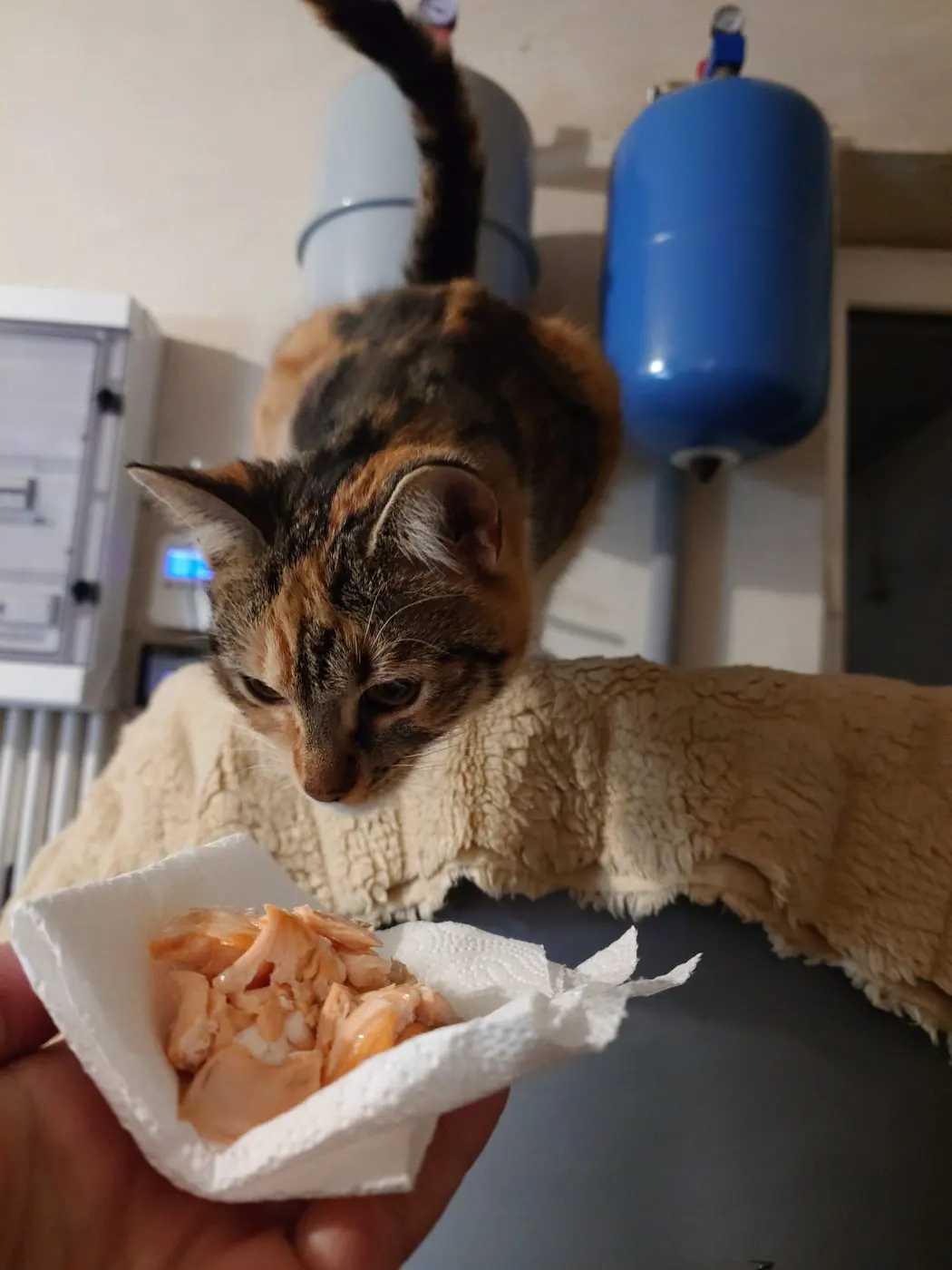
February. There was salmon left over from dinner and she appeared out of nowhere, as though she'd heard the packet open from the other side of the house.
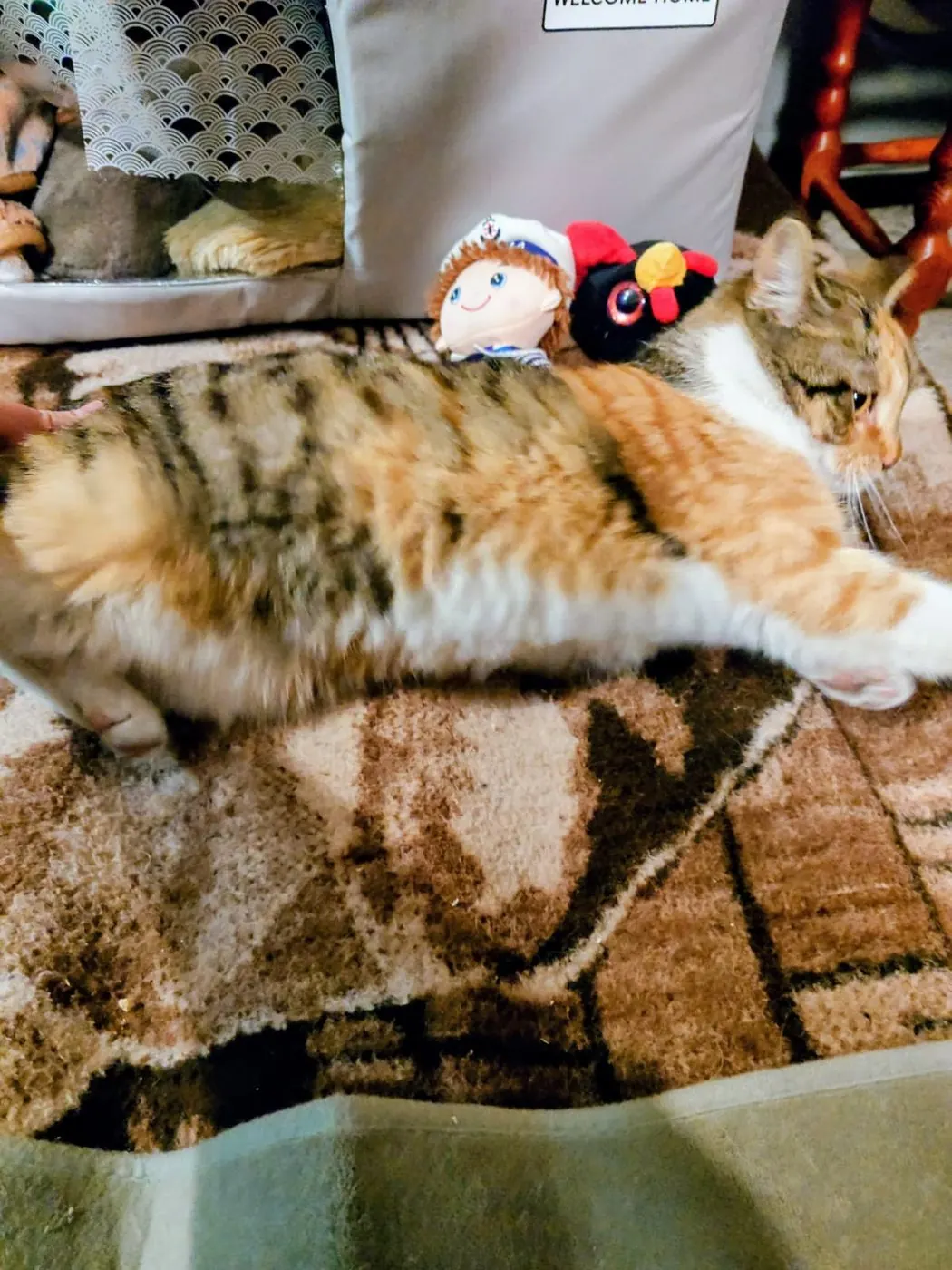
From a cardboard box in the garden to the living-room rug, among cushions and soft toys. Eight months after she turned up, there was no longer any doubt about who that space belonged to.
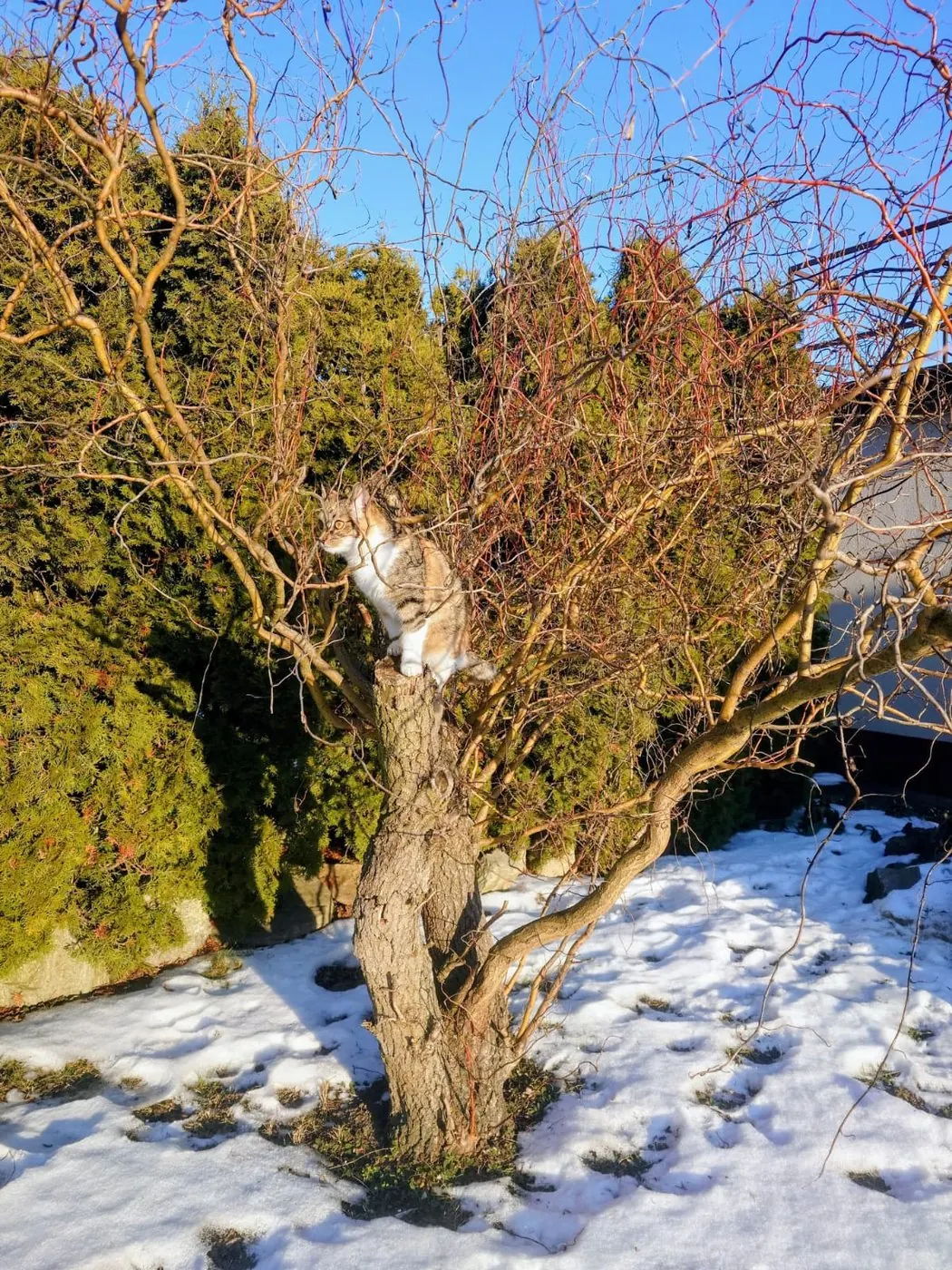
Snow still on the ground and up the willow she went, staying there a long while, watching the garden from above. An indoor cat doesn't do this; she never stopped being a bit of the garden.
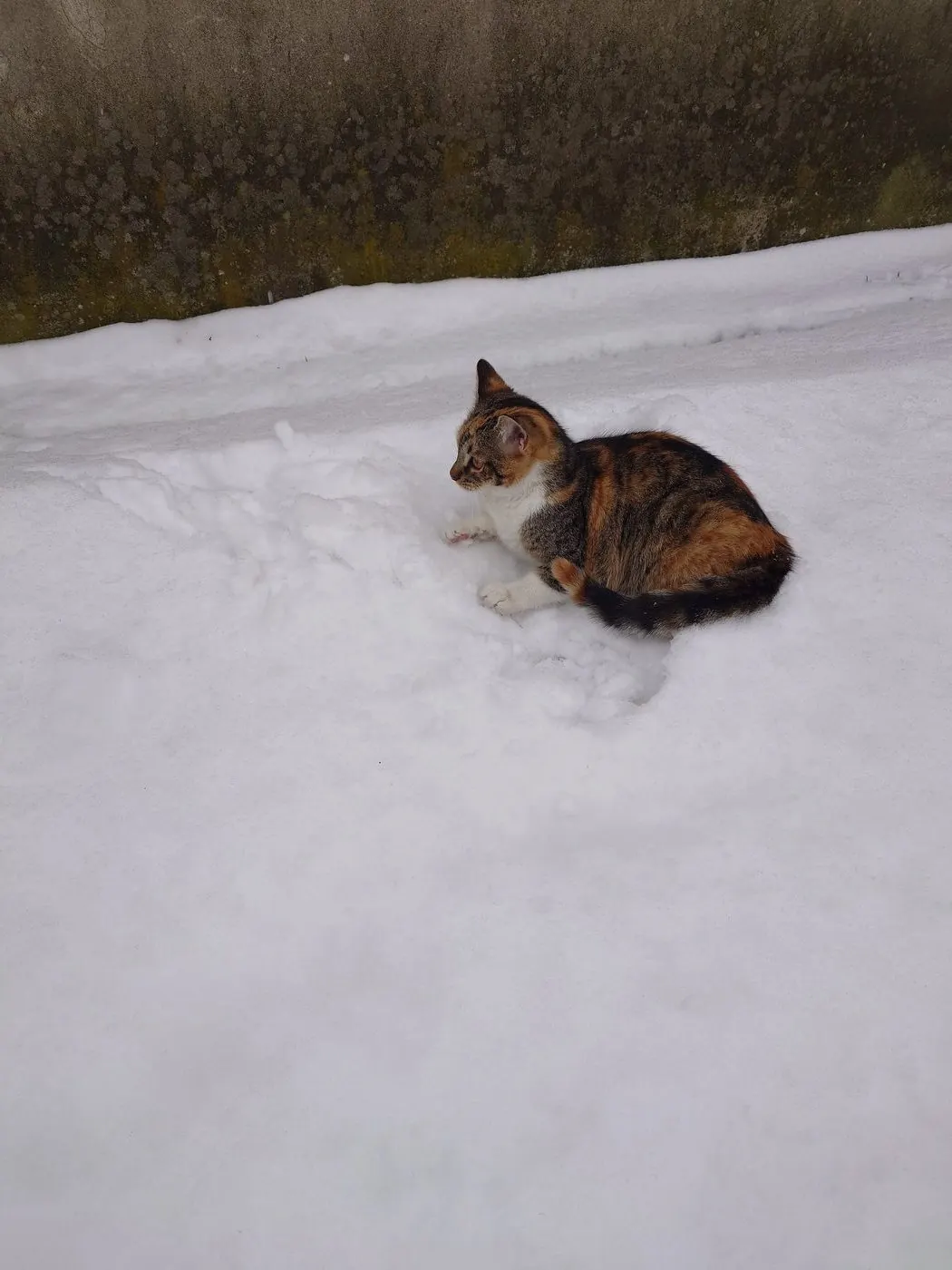
A week later she was crossing the yard in leaps, snow up to her belly. She adapted faster than I did.
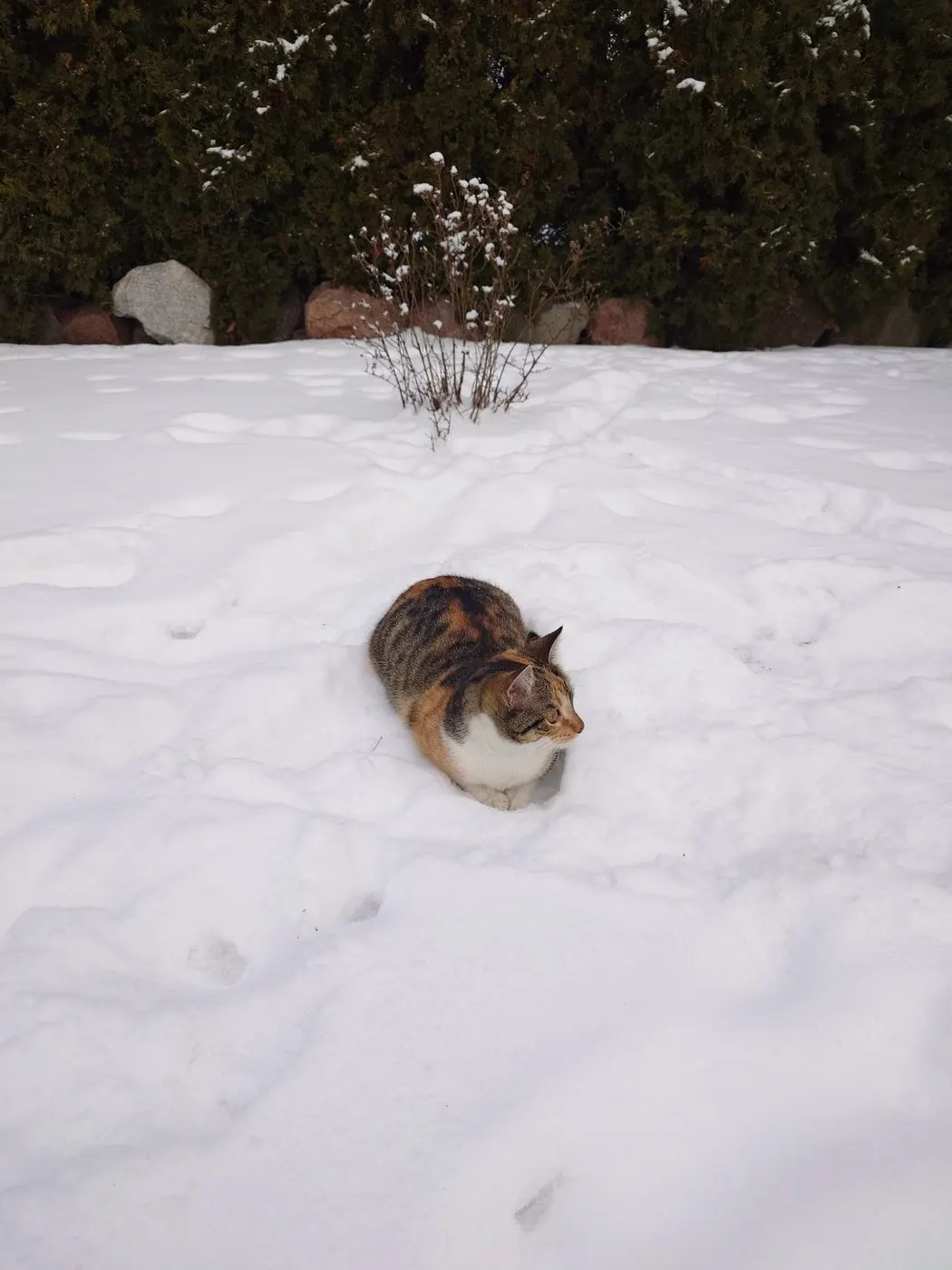
January, and her first proper Polish winter. She sat still for a long while, staring at it, before daring to put a paw down.
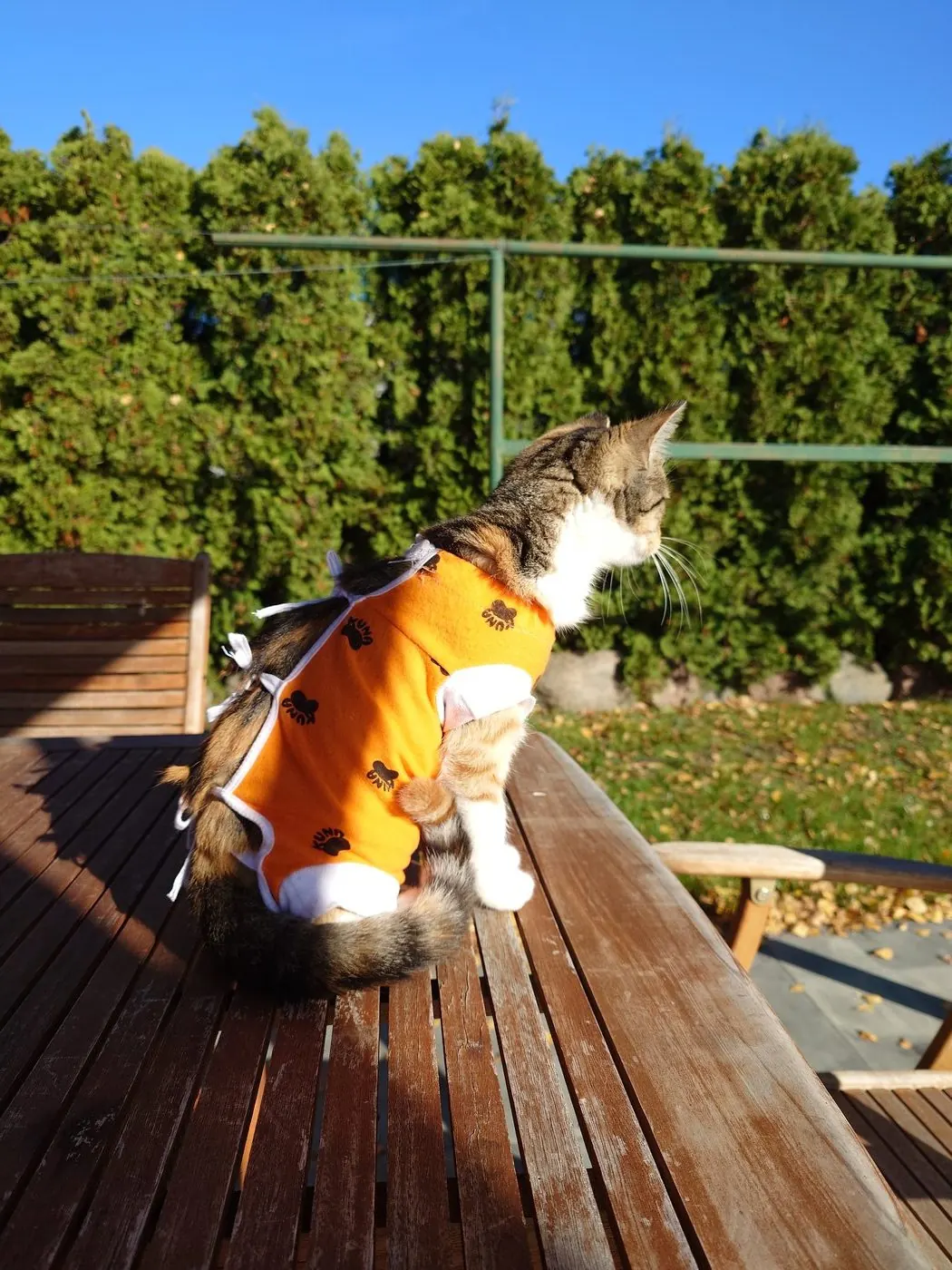
Clear sky, low sun, and the last week when there was still no hurry to go back inside.
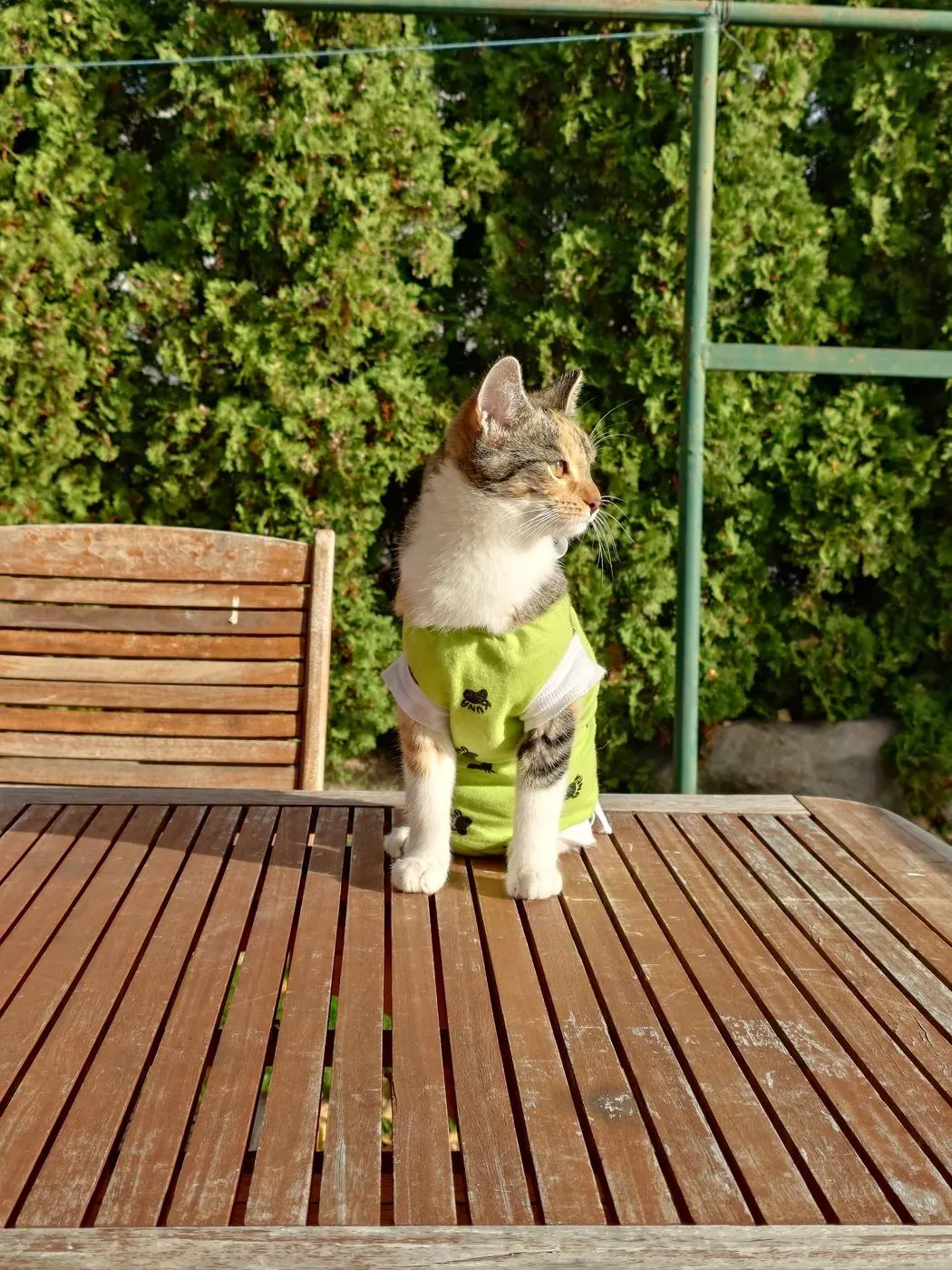
Autumn. The mornings had turned cold enough for a jumper, and she let herself be dressed with a patience she never showed again.
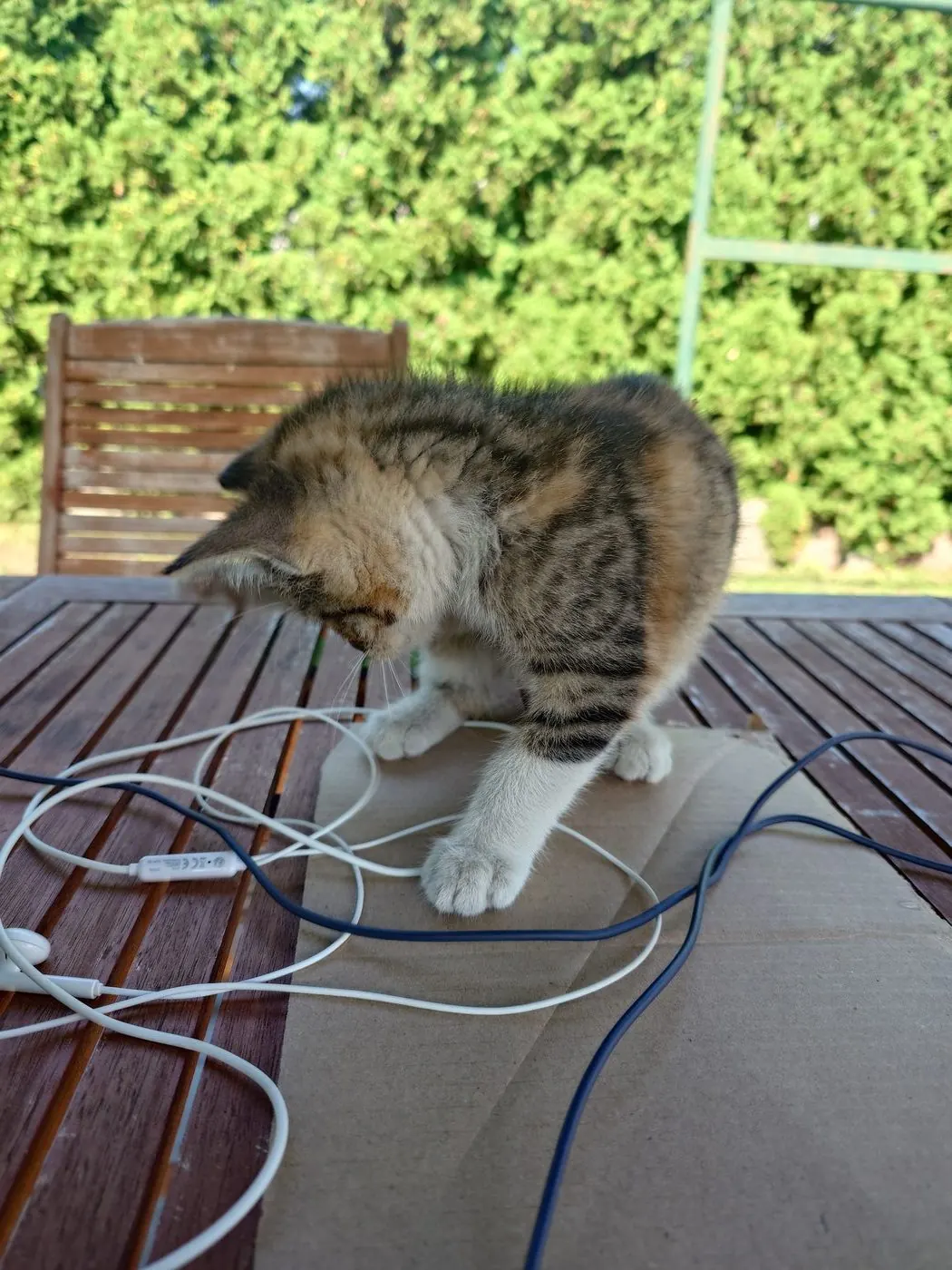
July. She found the earphones on the table and decided, without consulting anyone, that they belonged to her.
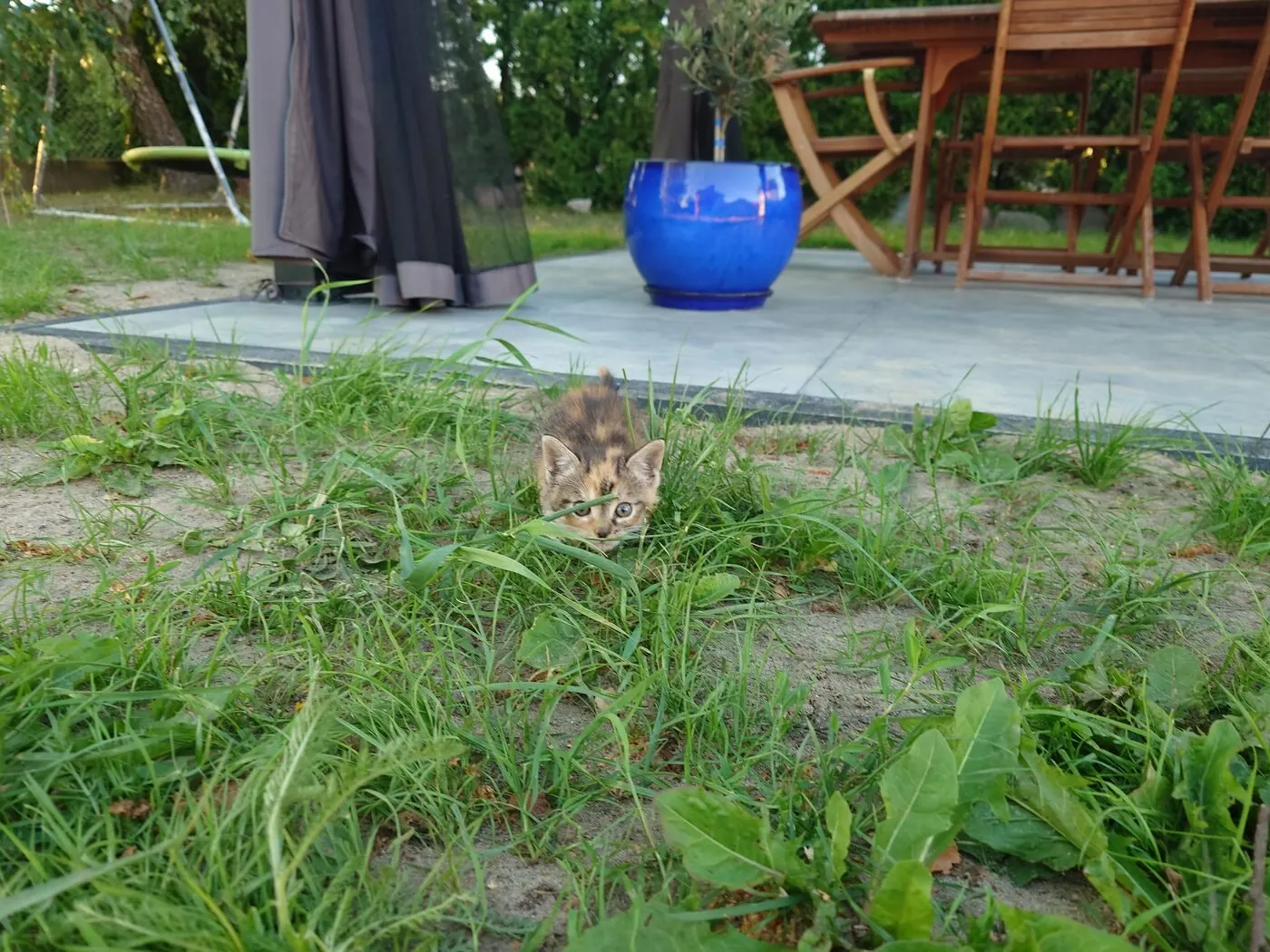
Hidden in the long grass, keeping an eye on the patio. From here on, the whole garden was hers.
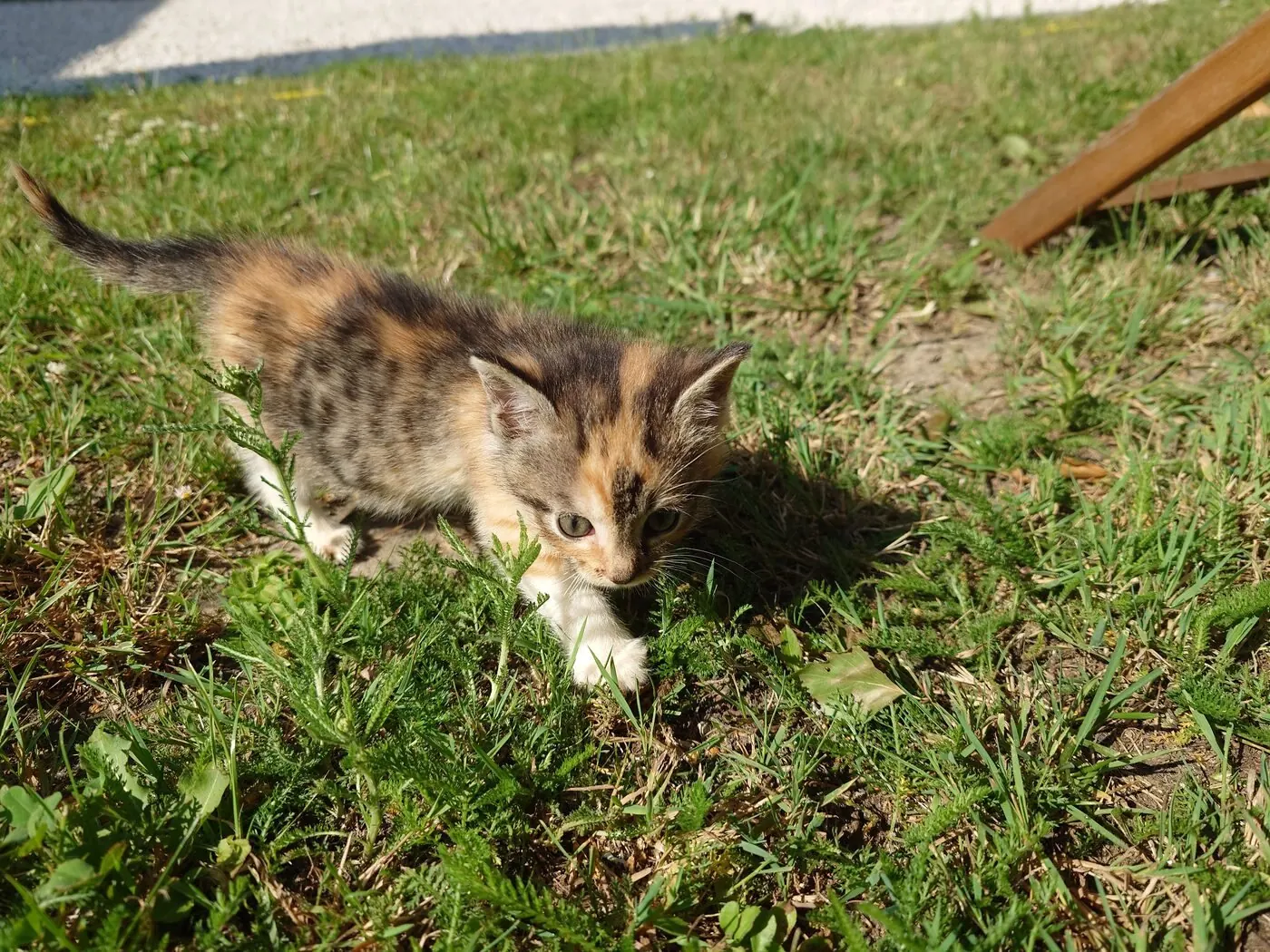
Head down among the weeds, rehearsing an instinct she didn't yet know she had. At that age, anything that moves is prey.
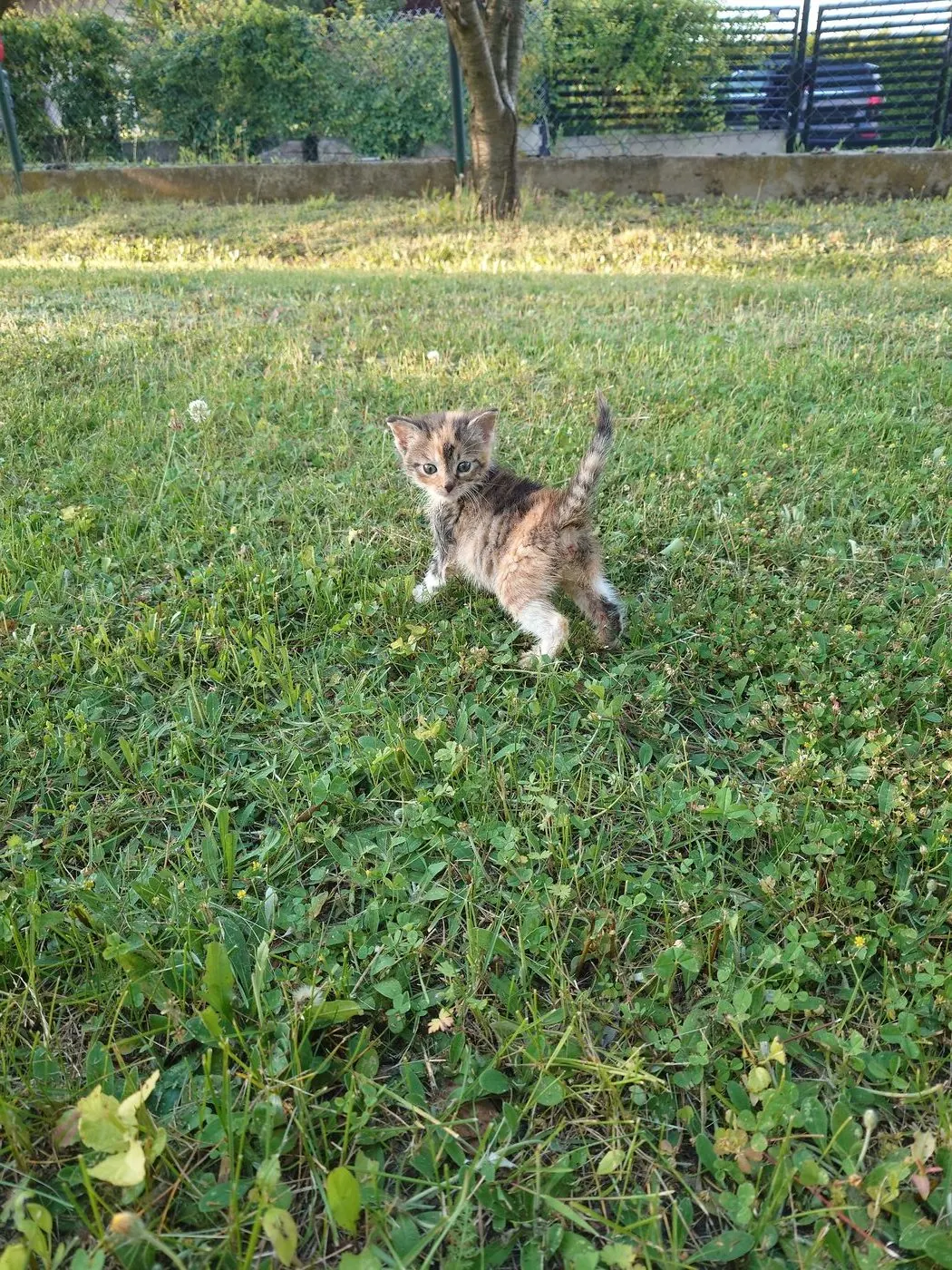
Two weeks on she was crossing the lawn by herself, tail in the air. Eating on her own came before working out what paws are for.
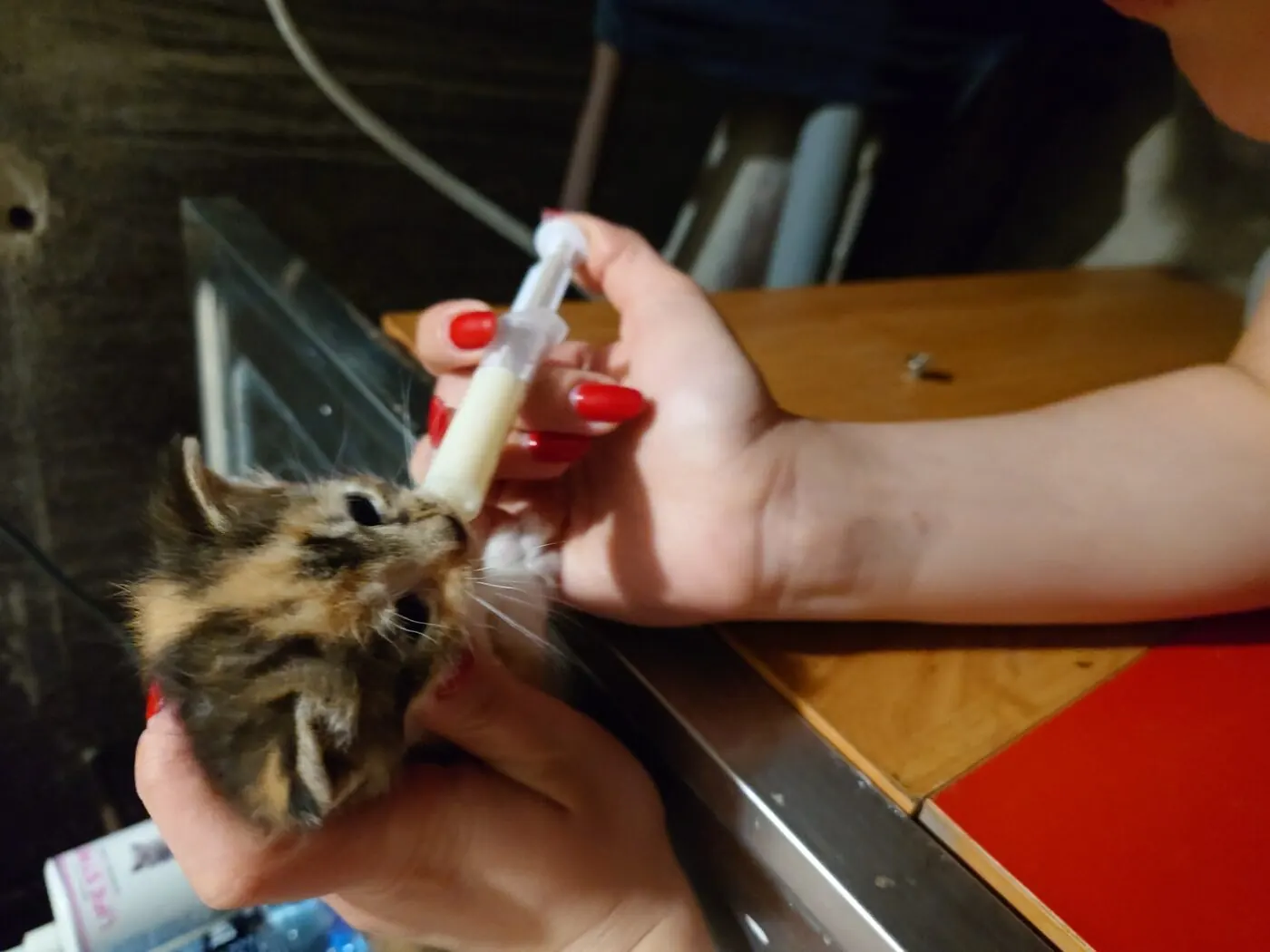
By the next day it was serious: kitten replacement milk, every few hours, fed by hand. A cat that age doesn't eat on its own — it depends entirely on whoever found it.
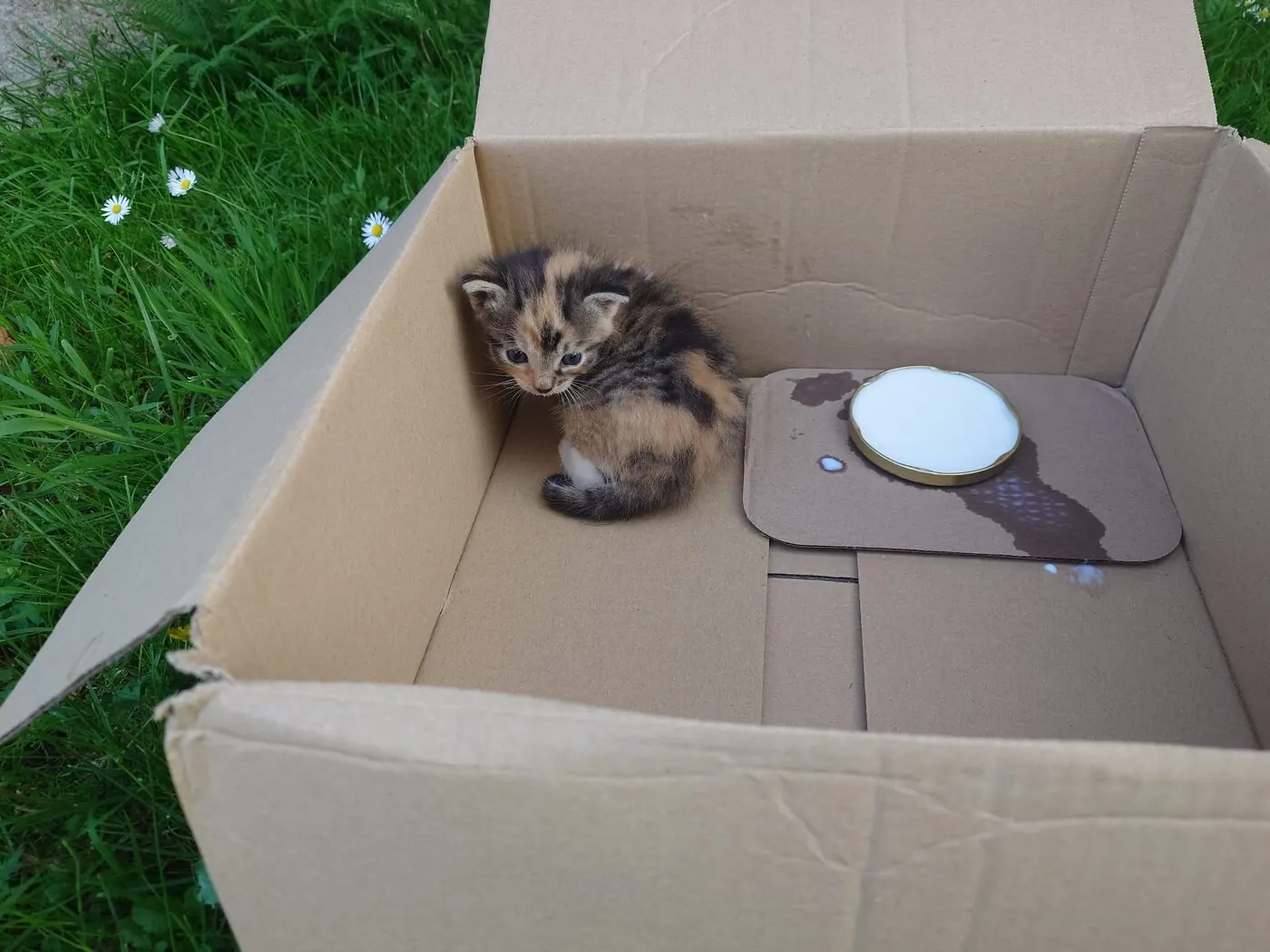
She turned up in the garden, about the size of a hand. A cardboard box on its side, a saucer, and the hope that she'd stay. I know now that cow's milk is bad for kittens — at the time it was what was there.
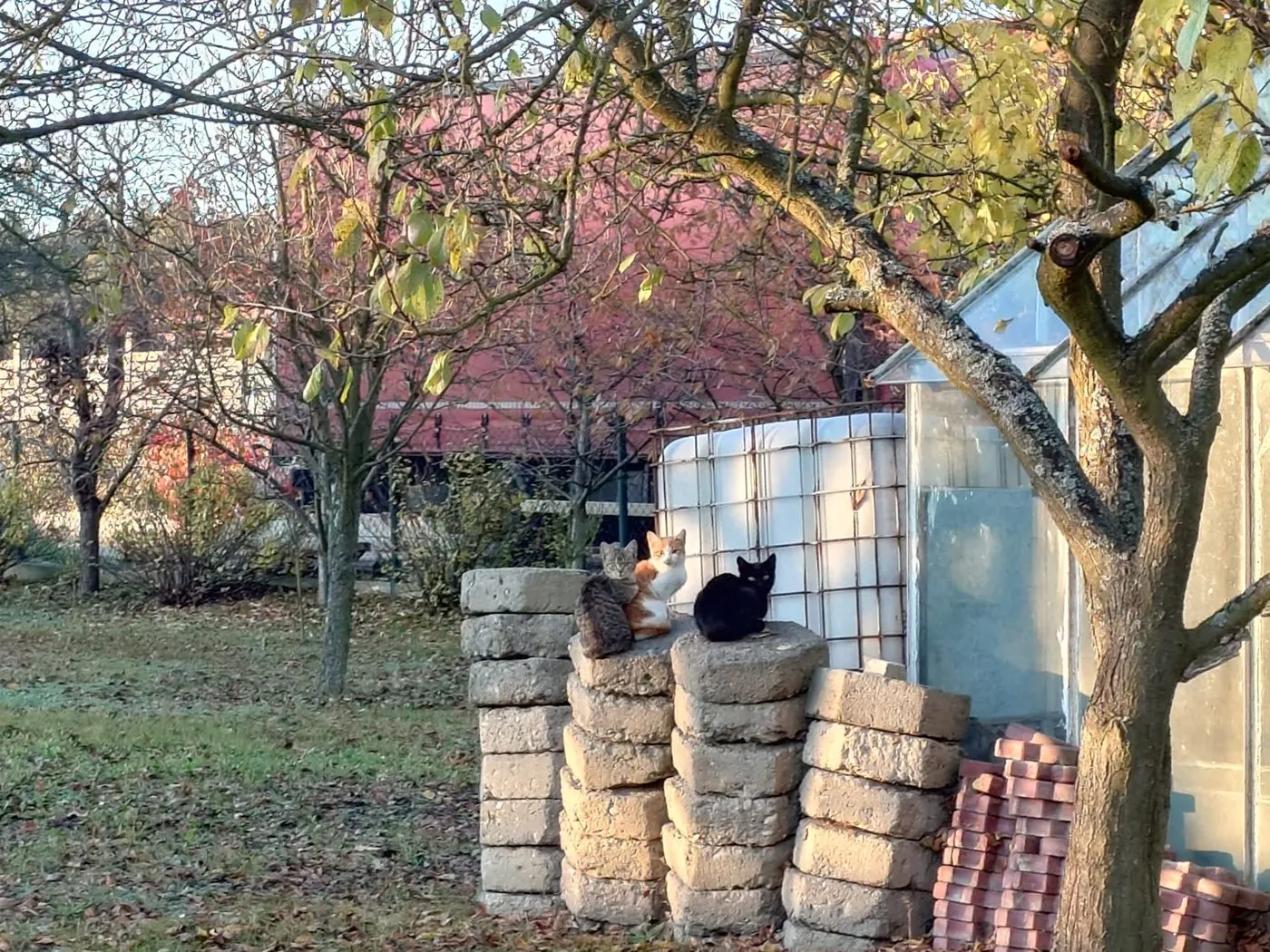
October 2024. Three of the Friends perched on the blocks in the morning sun, watching the garden wake up. They're not mine and never will be — but dinner is here.
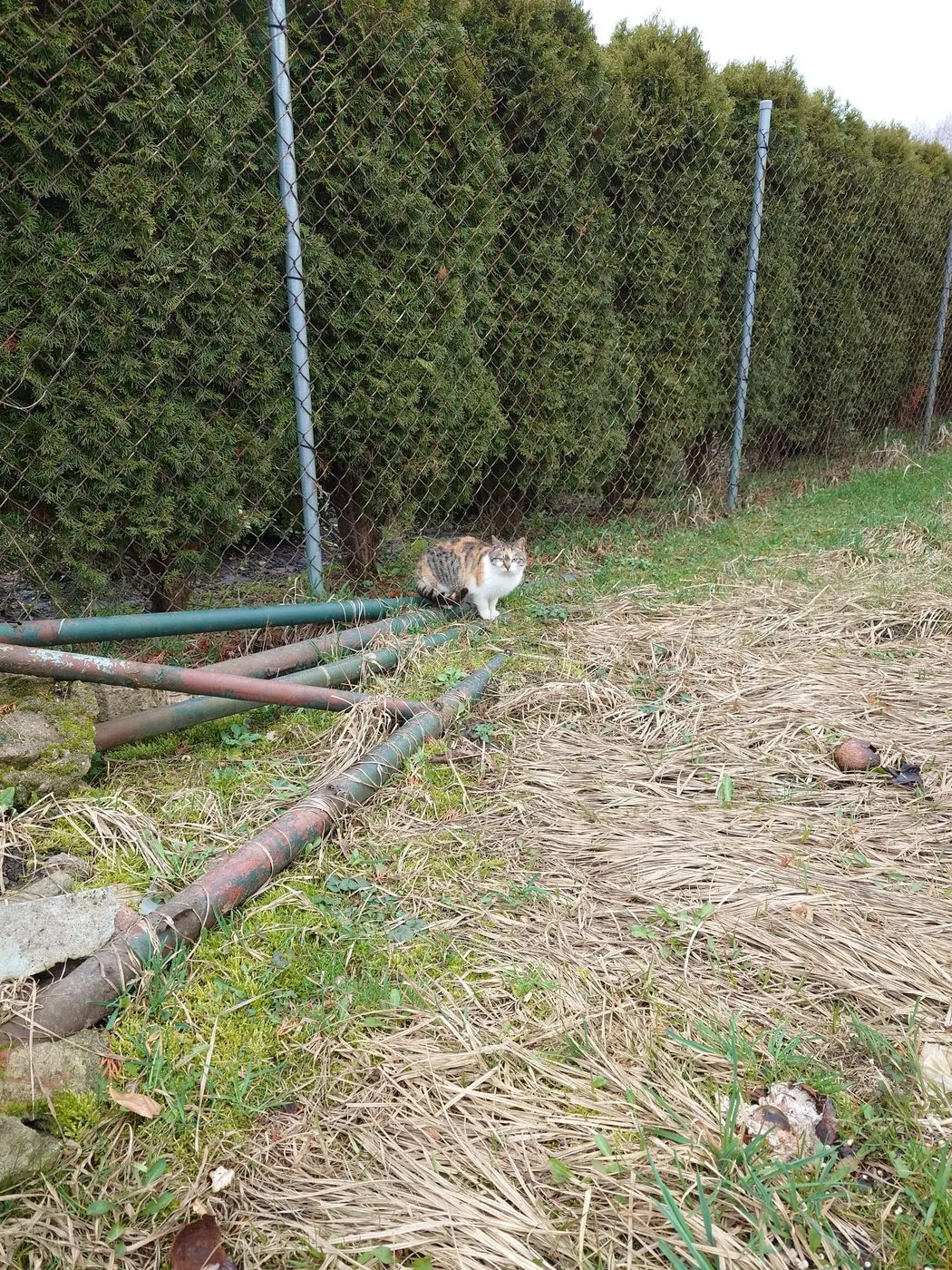
March 2024. This is Tuga's mother, by the hedge, more than a year before her daughter turned up on the grass. The garden was cat territory long before I noticed.